


May 19, 2026
In mid-April, representatives from six European countries gathered at the X4ITS meeting in Klagenfurt am Wörthersee to discuss how intelligent transport systems can make road traffic safer and more efficient. The focus was on real-time traffic information, C-ITS applications and common standards for safe, efficient and sustainable mobility along the TEN-T corridors.
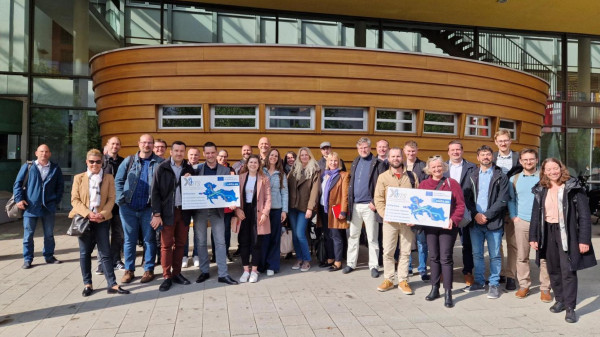
© AustriaTech
The two-day meeting brought together partners from the EU-funded X4ITS (‘Cross for ITS’) project to discuss current developments and the next steps for the project. Representatives from Austria, Czech Republic, Hungary, Croatia, Romania and Slovenia discussed the current status, the expansion and further development of Cooperative Intelligent Transport Systems (C-ITS) and their cross-border exchange.
The aim of the project is to improve the interconnection of intelligent transport systems along the Trans-European Transport Networks (TEN-T) and to harmonise technical standards across countries. This should enable traffic information to be used more efficiently across borders in the future and ensure that digital mobility services are interoperable.
Focus on real-time traffic information
A key focus of the technical workshop on the first day of the event was the implementation by individual countries of the Delegated Regulation on the provision of real-time traffic information services (RTTI). The provision of up-to-date traffic data is a central foundation for efficient and sustainable traffic management and improved road safety.
Representatives from Austria, Slovenia and Croatia presented the current status of national RTTI implementations and discussed the challenges involved in introducing such systems. This exchange enables different national solutions to be better coordinated, with the focus of making cross-border traffic information services even more efficient and interoperable in the future.
Following the workshop, the hosts from the city of Klagenfurt organised a tour to demonstrate the C-ITS applications implemented in the city.
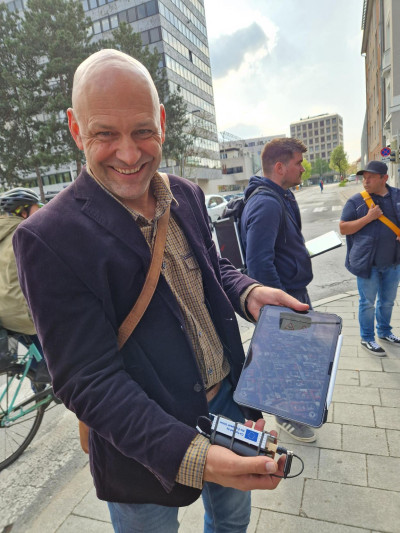
Gerald Miklin, Land Kärnten, präsentiert eine Live-Demonstration einer Onboard Unit. © AustriaTech
Steering Committee Meeting: Evaluation and Next Steps
The project’s Steering Committee Meeting took place on the second day of the event. These regular meetings provide an important forum for direct discussion of the project’s progress and enable joint decisions to be made within the consortium regarding the project.
A particular focus was placed on C-ITS applications. Among other things, these enable the prioritisation of public transport and emergency vehicles through direct data communication between vehicles and infrastructure.
The city of Klagenfurt presented its current implementation status as a best-practice example for urban areas and provided insights into the technical and operational aspects of the implementation. These included, among other things, a heatmap detection software and a camera-based AI system designed specifically to protect vulnerable road users such as pedestrians and cyclists. Further, the associated legal requirements under the General Data Protection Regulation were discussed.
In addition, ASFINAG presented their developments to the web- and app-based applications for major roads and motorways. These are designed to enable faster and more accurate provision of information on roadworks, travel and traffic status, thereby improving road safety.
A key focus of the meeting was the joint evaluation of ITS and C-ITS services. In particular, discussions focused on how the impact of the measures implemented can be systematically assessed in future – for example, in terms of road safety, road network efficiency and reduction of CO2 emissions. At the same time, it was emphasised that greater coordination of evaluation approaches across various European corridor projects – including MERIDIAN and MATIS – is crucial for ensuring the comparability and further development of solutions at European level.
The meeting in Klagenfurt highlights the importance of cross-border cooperation in the field of intelligent transport systems and demonstrates the extent to which Europe is already working towards a connected, data-driven future for mobility.


